Claude
The SympathizerClaude is the narrator’s most trusted American friend, a relationship that spans more than two decades and runs from the narrator’s childhood as a refugee to covert operations in exile. He recognizes the boy’s abilities, teaches him the practices of intelligence, and later advises him on interrogation and violence. His warmth is genuine, but it exists alongside his participation in systems of American power: he offers a refuge, a lesson, or a reassuring hand even as the techniques he teaches help make coercion more efficient.
Identity and Background
Claude first encounters the narrator in 1954, when he spots him on a refugee barge and recognizes his talents. The narrator is nine years old and already speaks some English, learned from an American missionary. Claude is supposedly working in refugee relief; by the time the narrator is an adult, Claude has a desk at the American embassy in Saigon and an ostensible assignment promoting tourism in a country at war. The narrator and Claude have known each other for more than twenty years, and the narrator regards him as his most trusted American friend.
Their intimacy includes teasing disclosures about race and belonging. During a night of drinking Tennessee bourbon, Claude confides that he is one-sixteenth Black. The narrator answers with a joke about Claude’s black hair, his ability to tan, and his dancing; Claude counters with a joke about Beethoven’s ancestry, and the narrator replies with a crack about Beethoven’s singing. The exchange is affectionate and irreverent, but it also places Claude’s American identity in a conversation about racial mixture that echoes the narrator’s own divided sense of belonging.
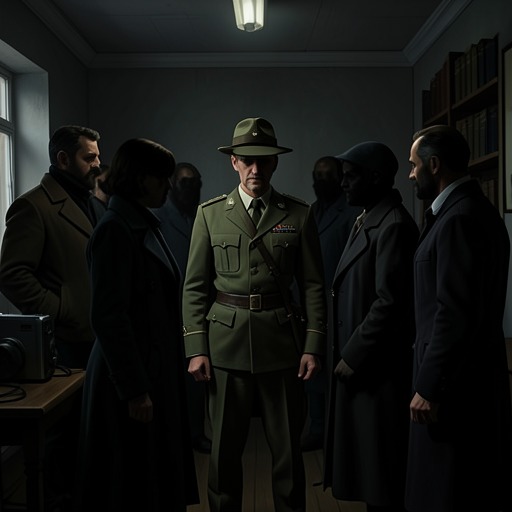
Claude is presented as both intellectual and physically vigorous, an American adviser whose authority can appear almost professorial. At the National Interrogation Center, the narrator remembers him lecturing with the command of a professor at the Sorbonne, Harvard, or Cambridge. Yet Claude is not remote from the people he instructs: he has lived in Vietnam so long that he barely sweats in the tropical humidity, and the narrator describes him as able to approach unseen but never truly to become invisible in the country. The distinction captures the limits of his assimilation. He can be intimate with Vietnamese colleagues, but he remains visibly American within the society where he works.
Friend, Adviser, and Witness
When the narrator tells Claude that the war is over, saying it aloud makes the defeat feel real. Claude does not offer a promise of American rescue. Instead, he says he will see what he can arrange, while voices sound in the background. The narrator imagines the embassy in disarray, its staff working through the crisis. Claude’s response is practical rather than consoling, consistent with a friend whose closeness does not erase his place inside American institutions.
During the evacuation, Claude appears beside The General at an evacuation center. The General hands over the keys to his Citroën, and Claude says he will return them in the United States. The General tells him to leave them in the ignition, observing that the car will be stolen anyway. Their exchange gives the impending loss a dry, material form: a car, its keys, and the casual assumption that the old order is already gone.
Claude later recounts his own last hours in Saigon. After leaving the narrator at the airport, he returns to his villa to sleep and has arranged for Kim to meet him at dawn so she can collect her family. The morning passes through a series of delays and calls from his chief, who eventually orders him to report to the embassy. Claude disregards the order and the daytime curfew, takes his guns, and drives across town looking for Kim. In the suburbs, he sees neighbors who had flown The General’s flag the previous week now displaying the communist flag. The account conveys both the danger and the rapidity of political realignment, but the surviving episode does not establish what happened to Kim.
After the evacuation, Claude reunites with the narrator and The General in the United States, regretting that they meet under such difficult circumstances. He later returns to the narrator’s life in Bangkok, where he is working under the familiar cover of a nongovernmental organization assisting refugees. Dressed in a Hawaiian shirt and linen pants, he greets the arriving men with visible affection, puts an arm around the narrator’s shoulders, and offers to take the group out for the night. The informality is real, even as his work remains tied to intelligence and covert activity.
Intelligence Training and Its Consequences
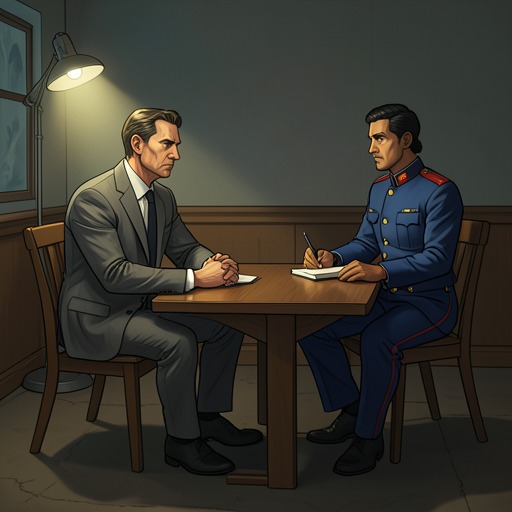
Claude’s influence is not limited to personal counsel. He teaches the narrator and other former soldiers and policemen at the National Interrogation Center, where twenty students take notes during his lecture. He criticizes interrogations that combine insufficient imagination with sadism, arguing that brute force can produce lies, misdirection, or bad information. His instruction shifts attention from the body to the mind: disorientation, sensory deprivation, and self-punishment can be applied in ways tailored to the individual, and the human mind can break down before the body shows visible injury.
The narrator recalls Claude’s teaching when he interrogates the Watchman. He admits that he took pleasure in the interrogation, continuing until the Watchman broke, as Claude had requested. Later, Claude replays the scene for him in a surveillance room. The narrator sees himself watching the Watchman confront his confession, while Claude and the narrator stand over him. In the narrator’s account, Claude has produced the scene and the narrator has directed it; the Watchman has been reduced to a person represented by his interrogators rather than allowed to speak for himself. Claude’s presence therefore connects technical instruction to a particular exercise of power, even though he did not anticipate everything that followed.
When the narrator wakes in his own white room after the episode, Claude tells him it is not his fault and pats his shoulder. The narrator cannot answer; the smell of sulfur and the thought that he might be a bastard overwhelm him. Claude’s reassurance offers personal comfort, but it cannot undo the narrator’s participation or restore the Watchman’s agency. Their relationship is thus marked by a consequential asymmetry: Claude has taught the narrator how to conduct psychological coercion, while the narrator must live with what he has done using that knowledge.
Claude’s advice also reaches beyond the interrogation room. He teaches the narrator mindful breathing, a practice Claude learned from Buddhist monks. Before going to Sonny’s apartment to kill him, the narrator uses the method on the drive, controlling his breathing until he feels mentally steady. Claude had connected the practice of focusing the mind with not shaking when squeezing a trigger. A discipline offered as a way to quiet the mind consequently becomes preparation for an assassination, another instance in which Claude’s lessons cross between care and violence.
Covert Work and Moral Distance
In Saigon, Claude tells the narrator that the Central Intelligence Agency routinely funds activities through front organizations rather than in its own name. These organizations are controlled by agents and sympathizers and may appear respectable because they are run by people in varied professions. The narrator later recognizes that he has been talking with Claude when he encounters the idea. The disclosure reveals Claude as a source of practical knowledge about covert influence, though it does not by itself identify every organization Claude works with or establish the precise extent of his own role.
In Thailand, Claude again operates under a refugee-assistance cover while supporting the mission being organized by The General and the admiral. Before the team departs, Claude gives the men a secular blessing in the form of high fives. He tells them to move quickly and quietly and to keep their heads down if shooting begins, leaving the fighting to the professionals. He squeezes the narrator’s shoulder and says they will be waiting for the group to return. The narrator recognizes Claude as one of the men, along with Man, who taught him everything he knows about intelligence and secrecy. The farewell is intimate, but Claude’s language also places the men within a managed operation whose risks he understands.
His response to the narrator’s killing of the Watchman shows another side of this moral distance. On the way to a destination in Thailand, Claude brings up what the narrator has done and says that, according to The General, the man was asking for it. The narrator replies that the Watchman did not ask for it. Claude clarifies that he means the man’s type: a professional malcontent, self-righteous and so unhappy that he would supposedly welcome punishment. The narrator recognizes this as the logic of the guilt-ridden character described in the KUBARK interrogation manual they studied together, a person who seeks proof that others are guiltier and may provoke unjust treatment to punish himself. Claude’s framing interprets the Watchman through the interrogator’s taxonomy; the narrator’s answer resists turning that taxonomy into an excuse for what happened.
Later, as police use a makeshift speculum and a bottle in an act of sexualized abuse, Claude tells the narrator that he did not teach them to do that and that they devised it themselves. The disclaimer distinguishes Claude’s formal instruction from the specific abuse, but it also exposes the limits of separating a teacher from the coercive world in which his methods are used. He can deny having taught that particular technique; he cannot make the surrounding system of interrogation and violence disappear.
Narrative Role and Significance
Claude’s character is built through recurring contradictions rather than a single revelation. He is an affectionate friend who welcomes the narrator, remembers their long history, and tries to comfort him. He is also an American adviser who teaches a state’s police how to break minds without leaving marks, explains covert funding, and helps prepare men for secret operations. The same gestures that make him personally trustworthy—his steady attention, shoulder pats, and practical advice—make his influence over the narrator especially powerful.
The narrative does not reduce Claude to either a benevolent mentor or a simple emblem of American intervention. He remains capable of genuine intimacy and of defending the narrator, while his expertise lends institutional and technical force to coercive acts. The narrator’s memories of Claude therefore track a larger conflict between personal loyalty and political consequence: the friend who first recognized a refugee child’s talents becomes the teacher whose lessons help shape the narrator’s actions as an intelligence operative, leaving him to reckon with responsibilities that reassurance alone cannot settle.